
Choosing a hot tub in Salt Lake City means looking beyond glossy finishes and long feature lists. Utah’s changing seasons, backyard layouts, delivery access, and the cost of keeping water warm all affect whether a spa becomes a favorite part of the home or a difficult purchase to maintain.
Before comparing brands, start with a guide to the best hot tubs in Salt Lake City and focus on how your household will actually use the spa. The best model is usually not the one with the most seats or jets. It is the one that fits your space, routine, budget, and comfort preferences.
Start With How the Hot Tub Will Be Used
A two-person spa can be ideal for quiet evening soaks, while a family that expects regular shared use may need more open seating and a larger footwell. Buyers focused on post-workout recovery may value targeted jet placement and supportive seats. People who entertain often may prefer several upright seats instead of one large lounger.
A Simple Planning Exercise
- List who will use the hot tub most often.
- Estimate how many times it may be used each week.
- Choose the primary goal: relaxation, recovery, social time, or a mix.
- Separate must-have features from extras that simply look appealing.
Measure the Space Before Comparing Models
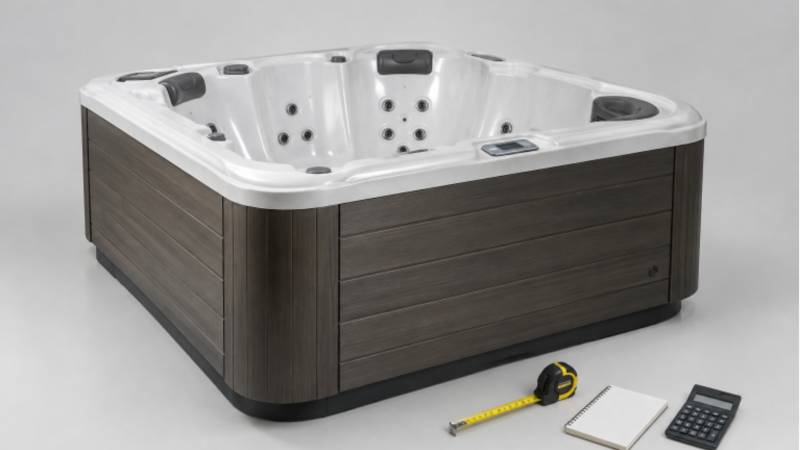
Measure more than the spa shell. Leave room for steps, a cover lifter, walking paths, and access panels for service work. Marking the proposed footprint with painter’s tape can reveal whether a model that fits on paper will make a patio feel crowded.
Also inspect the delivery route. Gates, fence openings, stairs, corners, roof overhangs, and power lines can affect whether a hot tub can reach the backyard. A larger model may look perfect until a delivery team discovers it cannot clear a side-yard turn. Check drainage, privacy, outdoor lighting, and the route from the house as well. A location that is convenient during a snowy Salt Lake City winter is more likely to get year-round use.
Build a Realistic Ownership Budget
The purchase price is only one part of ownership. Build a written estimate that separates the hot tub itself from site preparation, electrical work, delivery, steps, cover equipment, filters, water-care products, repairs, and electricity. A lower-priced spa can cost more over time if it has weaker insulation, limited warranty coverage, or difficult-to-access service.
Ask what the warranty covers for the shell, equipment, parts, and labor, and ask who performs local warranty repairs. Before committing, consider one practical question: could the monthly ownership cost still fit comfortably during an expensive season?
Compare Hot Tub Types and Sizes
- Compact models: Often suit couples, smaller patios, and buyers who want an easier fit near the home.
- Mid-size models: Can be a practical option for families and regular shared use without taking over the yard.
- Larger models: May suit bigger households or frequent guests, provided the base, delivery path, and budget support them.
- Inflatable models: Offer lower commitment and portability, but buyers should consider durability, insulation, and seasonal setup needs.
- Built-in installations: Can blend into a landscape plan, but require more detailed coordination and a greater long-term commitment.
Prioritize Comfort and Practical Features
Jet count alone does not determine comfort. Seat shape, depth, waterline, footwell space, and where jets contact the body are usually more meaningful during a real soak. Compare loungers, upright therapy seats, bench seating, and open layouts based on the people who will use them.
Look for controls that are easy to reach, reliable filtration, straightforward maintenance access, a well-fitting cover, and quality insulation. Lighting, waterfalls, and sound systems can be enjoyable, but they belong in the nice-to-have category after the essentials are covered.
Review Energy Use and Insulation
Ask each seller for clear product energy information rather than relying on broad efficiency claims. The Department of Energy notes that portable electric spas currently have no energy conservation standards, making direct model information especially useful when comparing options.
Plan Installation and Delivery
- Confirm the base is level, stable, and appropriate for the filled weight.
- Review the electrical requirements and whether a licensed electrician is needed.
- Measure the distance from the electrical panel to the spa location.
- Check applicable permits, property rules, setbacks, and neighborhood restrictions.
Make Water Care and Safety Part of the Decision
Routine testing, sanitation, filter cleaning, and a secure cover are core ownership tasks, not optional add-ons. Chlorine or bromine controls disinfectant levels, while pH testing helps keep water balanced. Heavy use can increase the attention the water needs, so choose a maintenance routine you can follow consistently.
The CDC recommends keeping hot tub water at or below 104°F, avoiding use when sick with diarrhea, and keeping children younger than five out of hot tubs. Store chemicals safely, use non-slip entry areas, keep lighting adequate, lock the cover when the spa is not in use, and speak with a qualified healthcare professional about pregnancy or individual medical concerns.
Use a Final Buying Checklist
- ☐ The hot tub fits with room for cover movement and service access.
- ☐ The delivery route has been measured.
- ☐ The base and electrical plan have been reviewed.
- ☐ The total installed cost fits the budget.
- ☐ The seating layout feels comfortable during a test sit or wet test.
- ☐ Energy, warranty, water-care, and local service details are clear.
Conclusion
The right Salt Lake City hot tub is the one that supports your real routine, fits the yard without creating installation problems, and remains manageable after the purchase. Careful measuring, honest budgeting, and a comfort-first comparison can help you choose a spa that stays useful through every season.