
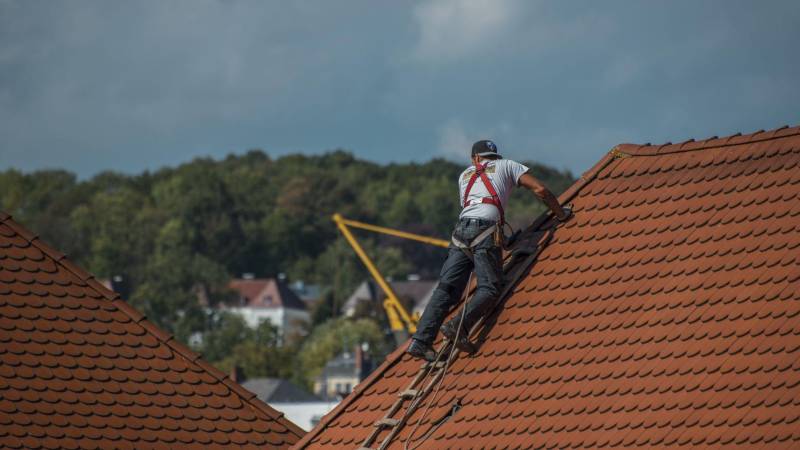
Your roof handles more than you probably realize. Scorching summers, stretches of rain, the freeze-and-thaw grind of winter – it takes all of it in stride, and quietly. That quiet is exactly the problem. Since it never asks for attention, it usually doesn’t get any. Then one day water starts spotting the ceiling, and by then the trouble’s been building for weeks, maybe longer.
Here’s the good news: catch these things early, and you’re looking at a small repair instead of a big one. Three signs are worth keeping an eye on. Each is your cue to get a professional up there before things get worse!
Sign 1: Visible Shingle Damage
Think of shingles as your roof’s outer skin. How they look tells you a good deal about what’s going on beneath them.
What to look for:
Walk the yard and study your roofline from the ground – no ladder required. Look for shingles that are cracked, curling up at the corners, or gone altogether. Every one of those is a little gap in the armor. A shingle that won’t sit flat gives water an easy path underneath.
Granule loss is trickier to catch. After a heavy rain, glance in your gutters. If you spot a gritty, sand-like buildup, that’s the protective surface coming off your shingles, and it usually comes with age. Once that coating thins, the material underneath faces sun and weather with nothing to shield it. Bald patches up on the roof mean it’s gone further than that.
None of this repairs itself. Spot any of it, and it’s worth a call.
Sign 2: Interior Water Damage and Leaks
Some roof trouble never shows on the roof. Now and then the first hint turns up inside your home instead.
What to look for:
Ceiling stains are the giveaway – a wide brown ring, or sometimes just a faint smudge you’d rather pretend isn’t there. Pay attention to it anyway. Water almost never falls straight down; it travels along framing and boards, so the actual leak may sit several feet from the mark you see.
Take a flashlight up to the attic and have a look around. Mold, soggy insulation, dark streaks running along the wood – those all mean moisture is getting in. Peeling paint on your walls or drywall that’s begun to sag? That tells you the problem has been quietly at work for a while.
And here’s what makes interior water damage worth acting on fast: the bill climbs the longer it sits. Wood drinks up moisture, mold spreads in a hurry, and a manageable repair can turn into a whole renovation. Moving early nearly always keeps costs down.
Sign 3: A Sagging or Uneven Roofline
A healthy roof has a clean, level ridge. If yours has started to dip, that’s not a wait-and-see situation.
What to look for:
Back up to the street and follow the top edge of your roof with your eye. Any sag, dip, or gentle wave where the line ought to be straight hints that the structure under the shingles is struggling. Could be water that’s weakened the decking, could be plain age, could be poor attic ventilation letting heat and damp collect.
A sag is more than an eyesore. In serious cases, it signals structural failure, and that can mean a partial or full collapse. So if the line looks wrong to you, book a professional assessment right away. Of the three, this is the one you really can’t put off.
Don’t Wait Until the Damage Is Done
Roof problems rarely stay small. A cracked shingle lets water in; water turns into leaks, and leaks left alone reach into the frame of the house. Worn shingles, water inside, a sagging line – each is your home telling you it needs a hand.
If any of this rings true, get in touch with a roofer you trust. A company like Hiner Roofing can come out, tell you straight where things stand, and help you plan the next move. The sooner you act, the more you protect your home and your wallet.