
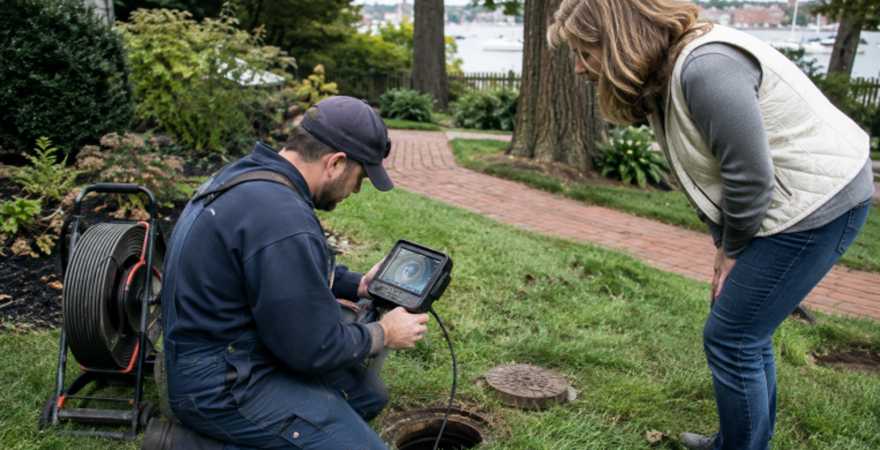
For Annapolis homeowners, sewer line trouble can start as a minor inconvenience and become a disruptive property issue if ignored. Homes with mature trees, older plumbing systems, sloped yards, brick walkways, patios, and driveways may require a repair approach that balances reliable pipe work with limited surface disruption. In some situations, trenchless sewer line repair in Annapolis Maryland, may offer a practical alternative to opening a long trench across the property.
The right solution starts with identifying the line’s actual condition. A recurring clog might be limited to one drain, while several fixtures draining slowly at the same time can suggest a restriction farther downstream in the main sewer lateral.
Warning Signs Of Sewer Line Trouble
Pay attention when plumbing problems repeat or affect more than one room. Common warning signs include toilets that gurgle, tubs that drain slowly, wastewater backing up into a lower-level shower or floor drain, and sewage odors indoors or near the yard. Wet patches, unusually lush grass in one strip, or soil that begins to sink can also warrant a prompt inspection.
- One slow sink may be a fixture-specific clog.
- Several slow drains may indicate a blockage or damage in the main line.
- Sewage inside the home or on the property should be addressed quickly.
- Keep children and pets away from sewage-contaminated areas until cleanup is complete.
Common Causes Of Sewer Line Damage
- Tree roots: Roots can enter small openings at joints, cracks, or damaged connections.
- Pipe age: Older clay, cast iron, and other materials can deteriorate, crack, or corrode.
- Ground movement: Settling soil, nearby construction, and seasonal temperature changes can shift pipe sections.
- Grease and debris: Fats, oils, wipes, paper towels, and hygiene products can restrict flow.
- Major structural damage: Breaks, sags, offsets, and collapses can prevent wastewater from moving properly.
What Happens During A Sewer Line Inspection?
Before approving excavation or replacement, request a camera inspection whenever conditions allow. A technician commonly accesses the sewer through a cleanout, guides a camera through the pipe, records the footage, and notes the distance to each defect. The video can help distinguish a removable blockage from a structural concern that needs repair.
- Locate the cleanout or another suitable access point.
- Clear the line if a blockage prevents the camera from passing.
- Run the camera through the accessible portion of the lateral.
- Identify defects and their approximate locations.
- Review the video and recommended options with the homeowner.
Local programs can also show why complete documentation matters. For example, private sewer lateral video inspections may document cracks, root intrusion, misaligned sections, sags, and leaks that affect a line’s performance.
Sewer Line Repair Options
No single method fits every Annapolis property. The pipe’s material, length, slope, depth, location, and overall condition should guide the recommendation.
Spot Repair
A targeted excavation may be appropriate when inspection footage reveals one accessible, isolated defect. It may not be the strongest long-term choice when a line has widespread corrosion, repeated root intrusion, or multiple deteriorating joints.
Pipe Lining
Pipe lining places a resin-saturated liner inside an existing pipe, which then cures to form a new interior pipe surface. This option depends on the old line having a usable path and sufficient structural stability for the process.
Pipe Bursting
Pipe bursting replaces the existing line by breaking the old pipe and pulling a new one into place. Utility locations, soil conditions, pipe route, access points, and the surrounding structures all affect suitability.
Traditional Excavation
Open excavation remains necessary when the pipe has collapsed, is badly misaligned, improperly sloped, or is unsuitable for trenchless work. The project may include excavation, replacement, testing, backfilling, and restoration of disturbed surfaces.
Trenchless Repair Vs. Traditional Excavation
- Surface disruption: Trenchless methods often use smaller access points, while excavation may require a longer open trench.
- Pipe condition: Lining or bursting may be suitable for suitable pipe paths, while collapsed or severely offset lines may require excavation.
- Restoration: Trenchless work can reduce disruption to lawns, landscaping, paving, and walkways, but restoration may still be needed.
- Access: Both approaches require planning around cleanouts, utilities, equipment access, and final testing.
Trenchless does mean no digging. Access holes, utility locating, permits, and repairs to connected components may still be part of the work.
What Affects Sewer Line Repair Costs?
Pricing varies because every sewer route and repair site is different. Important factors include the damaged pipe’s length and depth, the existing material, the need for root removal, work beneath pavement or structures, required permits, labor, equipment, testing, and restoration. Request a written estimate that separates inspection, repair work, permits, cleanup, and surface restoration rather than relying on one flat price.
Permits, Property Lines, And Responsibility
Responsibility for a sewer lateral can change at the property line or another locally defined connection point. Homeowners should ask the applicable utility where private responsibility ends, whether permits are required, who schedules inspections, and whether work near a public right-of-way needs additional approval. Practical sewer lateral maintenance guidance also emphasizes the value of understanding owner responsibilities before a repair becomes urgent.
Questions To Ask Before Work Begins
- What did the camera inspection find, and where is the defect?
- Why is this repair method appropriate for this pipe and property?
- Could a spot repair solve the issue, or is replacement more appropriate?
- What does the estimate include for permits, testing, cleanup, and restoration?
- Who will arrange utility marking and final inspections?
- What labor and material warranty applies?
Simple Sewer Line Maintenance Tips
- Do not flush wipes, paper towels, grease, or hygiene products.
- Use drain screens to catch hair and loose debris.
- Treat repeated clogs as a reason to investigate, not just as separate drain problems.
- Keep camera videos, permits, invoices, and repair records.
- Know where the sewer cleanout is located before an emergency occurs.
Conclusion
Early diagnosis gives Annapolis homeowners more control over a sewer line repair decision. A camera inspection can clarify whether the problem is a clog, root intrusion, or structural pipe failure. With that information, it is easier to compare repair methods, restoration needs, permits, and the property’s long-term value.